
Contrary to what many employers believe, not all good potential employees are actively looking for a new job. Indeed, many of the best people already work for someone else, but that does not mean they would never consider another offer. These people are called passive candidates. They are not searching, but they are watching. Social media is one of the most effective tools for reaching them.
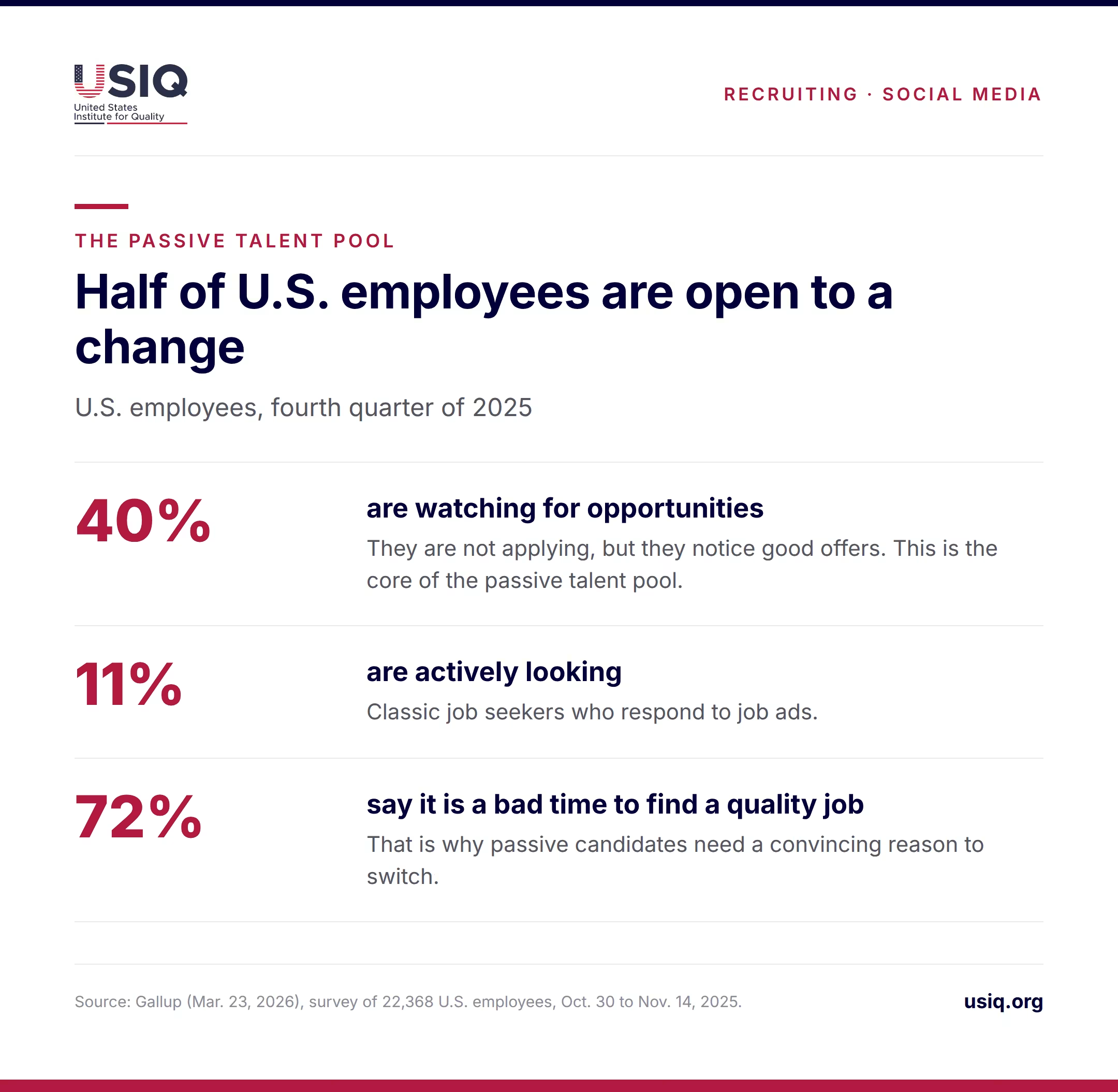
The numbers show how large this group is. In Gallup’s survey of more than 22,000 U.S. employees at the end of 2025, 40% said they were watching for opportunities and another 11% were actively looking. At the same time, 72% said it was a bad time to find a quality job. Many people are open to a change, but they will only move if an employer gives them a convincing reason.
Quick answer: To reach passive candidates on social media, choose the platforms your target group actually uses, show your workplace honestly through stories and employee voices, share content that is useful even to people who are not job hunting, and contact promising people with short, personal messages. Show pay ranges and flexibility clearly, respond quickly, follow the rules for job ads and measure which content leads to real conversations and hires.
Social Media for Recruiting
Whether on LinkedIn, Instagram, Facebook or TikTok, social media gives companies the chance to show their values and present themselves in a subtle but persuasive way. This guide explains practical ideas for reaching passive candidates through social media, with clear language, a warm tone and the power of storytelling. For a broader introduction to the topic, see USIQ’s social recruiting playbook for HR.
Understand Who Passive Candidates Are
The first step is to understand who passive candidates are. They are employed, and some of them are not fully happy in their current job, which makes them open to a change. They do not apply for jobs every day. Instead, they scroll through social networks, look at company posts and keep an eye on the market without saying so.
That means you cannot approach them the way you approach active job seekers. You need a gentler and smarter approach. First spark their interest, then give them something to think about and build their trust step by step.
This is where social media is so effective. It lets you reach people without interrupting what they are doing. You meet them while they are browsing their feeds, and if the experience feels pleasant, they start to see your company as a place where they might like to work.
What Passive Candidates Need Before They Reply
A passive candidate has a job and therefore something to lose. Before they answer a message or click on an ad, they want to know whether a change is worth the risk. The most important questions are usually the same:
- Pay: Is the salary range clearly better, or at least fair? Many states require a pay range in job postings anyway.
- Flexibility: Are remote work, hybrid models or flexible hours possible?
- Development: Will they learn more, take on more responsibility or have better career prospects?
- Team and leadership: Who would they work with, and what is the manager like?
- Stability: Is the company on solid ground? In an uncertain job market, this question matters more than usual.
Answer these questions openly in your posts, careers page and messages. Independent proof, such as a verified employer seal with transparent criteria, can help candidates trust what you say.
Use the Right Platforms for the Right Roles
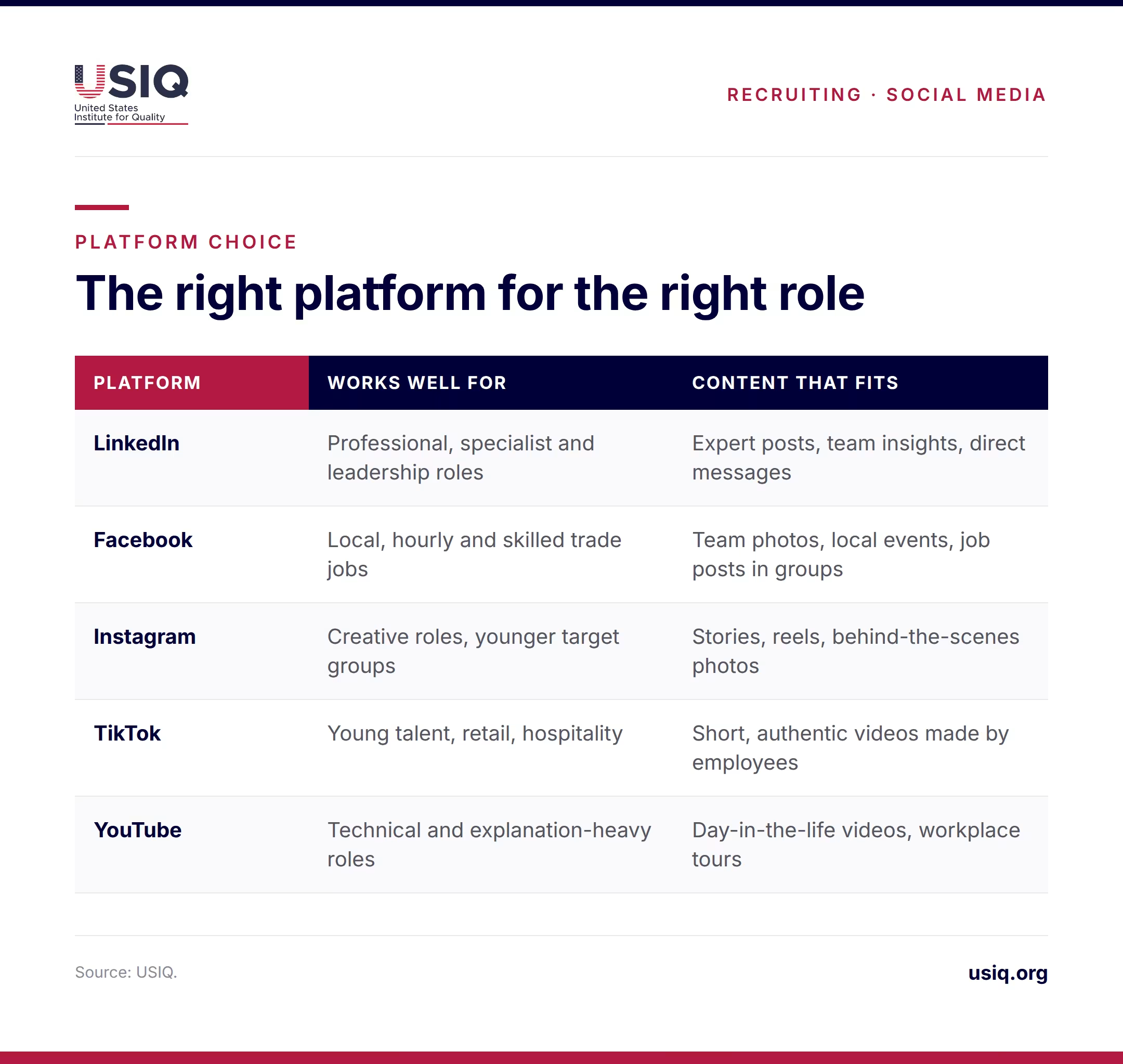
There are many social networks, and passive candidates are not all in the same place. It helps to know which platform fits which type of role. For professional and office roles, LinkedIn is usually the first choice. For creative, tech-oriented or younger employees, Instagram or TikTok can work well.
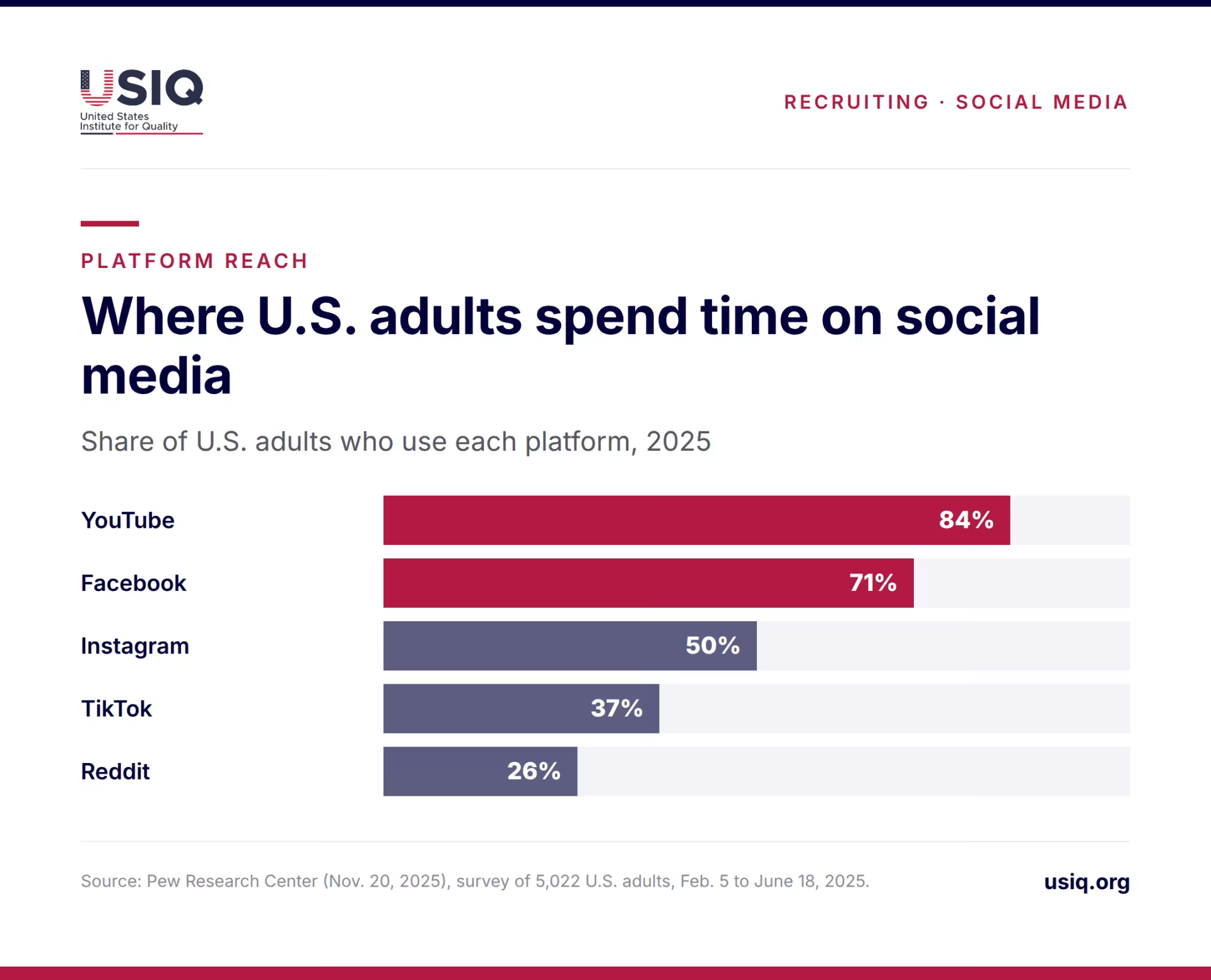
Facebook is still a strong platform for local and hourly jobs, because so many adults use it. According to the Pew Research Center, 84% of U.S. adults used YouTube and 71% used Facebook in 2025, compared with 50% for Instagram and 37% for TikTok. Some companies also use YouTube or X to reach specific target groups. The key question is who your ideal candidate is and where they spend their time online.
Once you understand the platform, you can create content that fits into it. LinkedIn calls for more professional content, while Instagram suits relaxed photos and short behind-the-scenes videos. Content that matches the platform feels natural and is easier for people to discover.
Make Your Company Page Shine
When people come across one of your posts, they often visit your company page next. If it looks dull, confusing or outdated, they leave. Your company page should look friendly, well organized and up to date.
Start with a clear profile picture and a cover image that fit your brand. Your bio should explain in simple words what your company does. Add a link to your website and a short description of your culture or mission.
Post regularly, and not only job ads. Show what everyday work looks like: share stories, interesting facts and insights about the team. A good company page shows what it is like to work for you, and that is exactly what passive candidates want to know. They are not looking for a job posting but for a reason to be interested in your organization.
Build Up Your Work Culture Through Stories
One of the most effective ways to reach passive candidates is to let them experience what it is like to work at your company. Show the reality behind the scenes, not just polished advertising photos.
That is where stories come in. Use photos, videos and short captions to paint a picture of your work culture. Post about team lunches, birthdays, remote work setups or group projects. Introduce new team members, celebrate achievements and show how your team creates value.
You can do this through Instagram and Facebook Stories, LinkedIn posts or short TikTok clips. When passive candidates see colleagues who enjoy their work, they can imagine themselves in the same role. Over time, simple storytelling can turn a casual viewer into a future team member.
Promote the Message Through Employee Advocacy
People trust people more than they trust companies. That is why employee advocacy is so effective. When your own employees talk about what it is like to work for you, your message reaches far more people than the company page alone.
Encourage employees to share company posts, tag the workplace in photos or talk about their successes on social media. Do not force anyone; make it easy and voluntary. You could offer sample captions or mention new posts in team meetings.
Your official page can also feature employees directly. Share short interviews, “A Day in the Life” posts or fun portraits of team members. These authentic voices show passive candidates that real people work at your company.
Employee referrals are a natural next step. A colleague who knows both the company and the candidate can often make the first contact more easily than a recruiter. A clear referral program with a simple process and a thank-you for successful referrals makes this easier.
Create Content That Educates and Adds Value
Not every post has to be about hiring. Passive candidates rarely respond to job ads, but they do engage with content that teaches, inspires or entertains them. This is where value-based content comes in.
Share tips from your field, practical advice for the workplace or other useful information. A design agency could post design tips or lessons from a project. A tech company could write about new trends or tools in its industry.
This kind of content makes your employer brand look helpful, competent and caring. It also brings people back again and again. They may not be looking for a job today, but when they are, they will remember your company because they learned something from you. Consistent, helpful content also makes it easier for AI assistants to describe your company accurately, as USIQ’s article on how candidates use AI to research employers explains.
Reach Out With a Personal Message
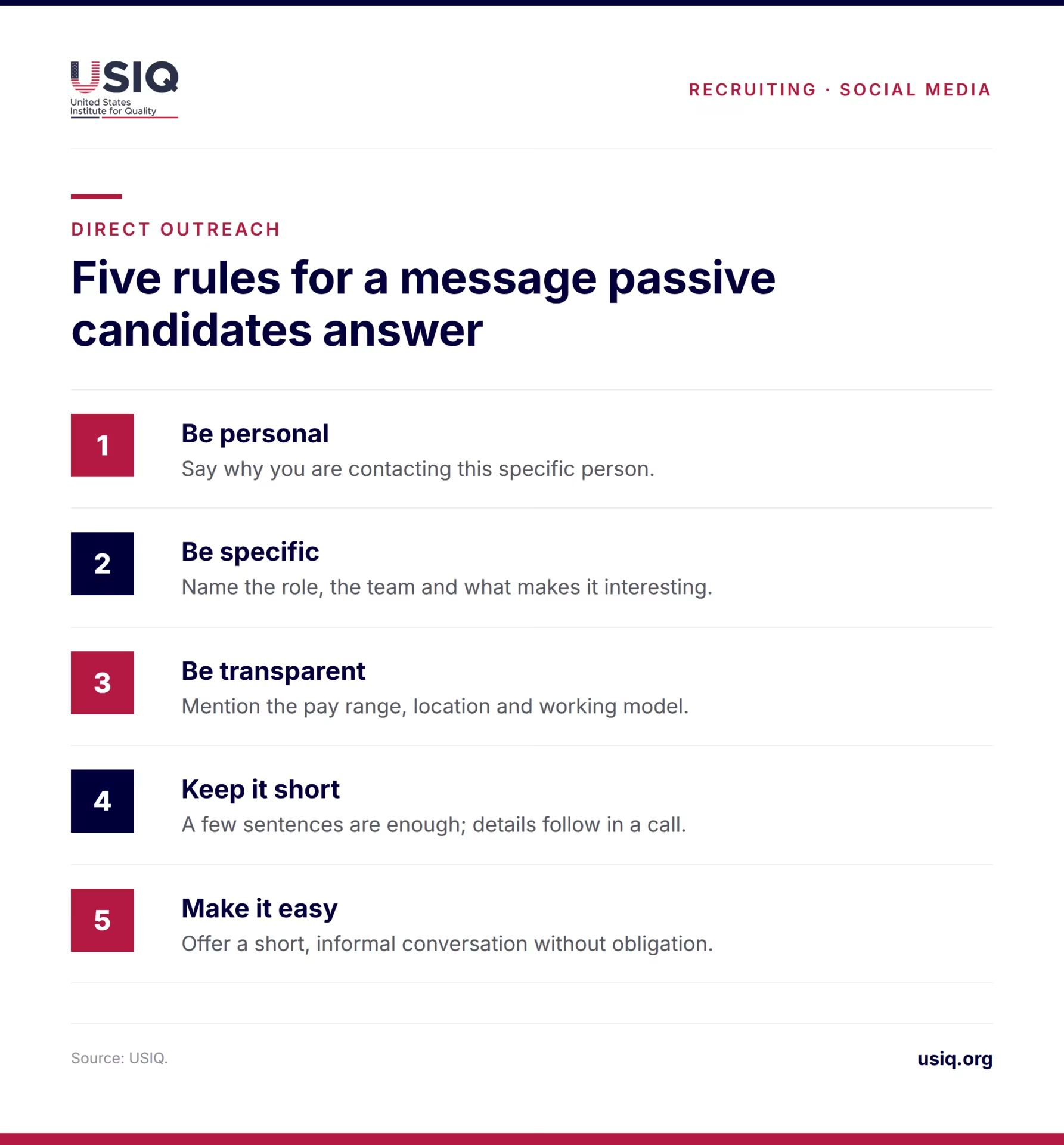
Sooner or later, you will want to contact a promising person directly. This is where many companies make mistakes. A generic copy-and-paste message is quickly ignored. A short, personal message has a much better chance.
- Be personal: Say why you are writing to this specific person, for example because of a project, a post or a skill.
- Be specific: Name the role, the team and what makes it interesting.
- Be transparent: Mention the pay range, location and working model.
- Keep it short: A few sentences are enough. Details can follow in a conversation.
- Make it easy to answer: Suggest a short, informal call without obligation.
If the person does not reply, one friendly follow-up is fine. After that, respect their decision. A polite approach leaves a good impression, even if the timing is not right today.
Target the Right People With Paid Ads
Sometimes organic reach is not enough, especially if you want to reach a specific group. That is where paid social ads can help. LinkedIn, Facebook and Instagram let you target people by job title, skills, interests or region.
You can promote a post about your company, an interesting story or an open position so that it reaches the right audience. This can save time and money, because your budget goes to the people you actually want to reach.
Paid ads also keep you visible. Even if someone does not click today, they are likely to remember your name later. That is how you plant a seed in the mind of a passive candidate and nurture their interest over time.
Keep the rules in mind. Federal law prohibits job ads that show a preference for, or discourage, applicants because of race, sex, age (40 or older), disability or other protected characteristics, as the EEOC explains. On Meta platforms, job ads run in a special ad category for employment. Since a 2019 settlement with civil rights groups, these ads cannot be targeted by age, gender or ZIP code, and location targeting must cover a radius of at least 15 miles. Use inclusive language in your ads and avoid wording that could exclude groups, such as “young team” or “digital native.”
Respond and Engage Like a Human
Social media recruiting is not a one-way street. When someone likes, comments on or shares your post, respond. Thank people for compliments, answer questions or ask a question yourself to start a conversation.
Such interaction gives your company a human face. When people see that your brand listens and responds, they feel closer to it. It also gives them an informal way to ask about jobs or company life.
If someone seems interested in your content, reply with a short, friendly comment or point them to your careers page. Do not push; simply make yourself approachable. A small conversation today can lead to a big change in the future. And once someone does show interest, move quickly: USIQ’s guide on how to attract employees faster shows how to keep candidates in the process.
Track What Works and What Doesn’t
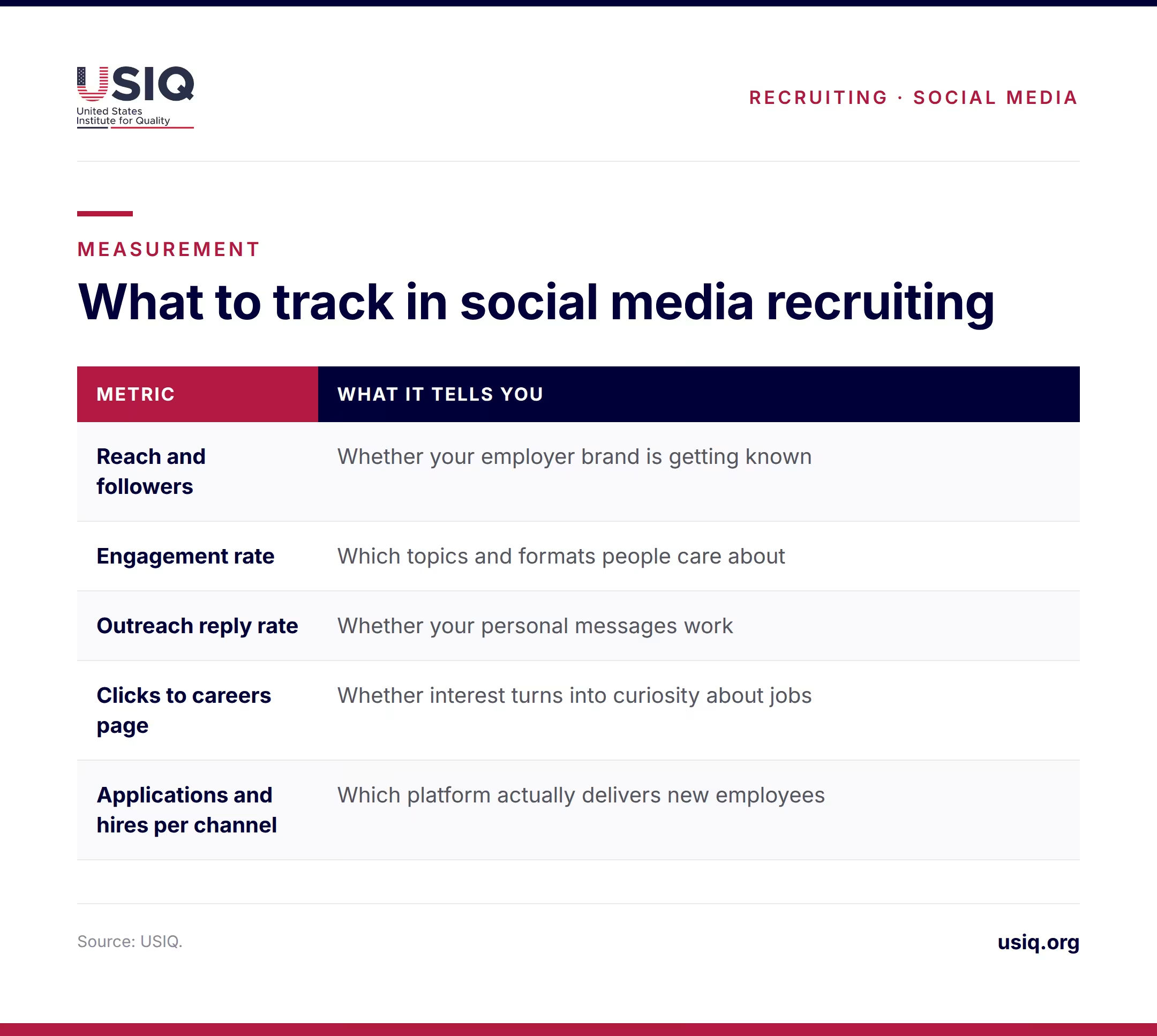
Social media recruiting works best as a continuous process. Do not publish a post and forget it. Check the numbers. Almost every platform shows how many people liked, shared or clicked your posts. This helps you see what to do more of and what to avoid.
Look for patterns. Do videos or photos get more attention? Are there times of day when engagement is higher? Which posts by employees perform best? Use these insights to improve your content.
Most importantly, connect social media data with your recruiting results. Likes are nice, but what counts is how many conversations, applications and hires come from each channel. USIQ’s article on the most important KPIs in recruiting explains which figures to track.
You do not have to be an expert; you just need to stay curious. Social media changes constantly, and the best recruiters keep learning. The better you know your audience, the better you can reach passive candidates.
Stay Consistent and Be Patient
Social media can connect you with passive candidates, but it takes time. It is not about posting a job ad and waiting for applications. It is a continuous, friendly reminder that builds trust in your brand.
Post consistently, ideally two or three times a week. Keep the same tone on every platform. Make sure people understand who you are, what matters to you and why your company is a great place to work.
Be patient. Some people follow a company for months before they apply. Others recommend it to a friend. Every post is a step forward. If you stay consistent and authentic, your employer brand will grow, and future team members will find their way to you.
Frequently Asked Questions
What is a passive candidate?
A passive candidate is a person who currently has a job and is not actively applying elsewhere, but would consider a change if the right offer came along.
Which social media platform is best for recruiting passive candidates?
It depends on the role. LinkedIn works well for professional and specialist roles, Facebook for local and hourly jobs, and Instagram or TikTok for creative roles and younger target groups.
How do you write a message to a passive candidate?
Keep it short and personal, explain why you are contacting this person, name the role and pay range and suggest an informal conversation without obligation.
How long does it take to recruit passive candidates through social media?
Building an employer brand on social media takes months. Direct outreach to individual candidates can lead to conversations within days, especially if your brand is already known.


Sources
- American Civil Liberties Union. (2019, March 19). Facebook agrees to sweeping reforms to curb discriminatory ad targeting practices. https://www.aclu.org/press-releases/facebook-agrees-sweeping-reforms-curb-discriminatory-ad-targeting-practices
- Gallup. (2026, March 23). U.S. worker thriving declines as job market pessimism grows. https://www.gallup.com/workplace/703280/worker-thriving-declines-job-market-pessimism-grows.aspx
- Pew Research Center. (2025, November 20). Americans’ social media use 2025. https://www.pewresearch.org/internet/2025/11/20/americans-social-media-use-2025/
- U.S. Equal Employment Opportunity Commission. Prohibited employment policies/practices. https://www.eeoc.gov/prohibited-employment-policiespractices
Related Articles
Our quality management system passed an independent ISO 9001:2015 audit by QRO Certification LLP. What the audit covered and what it means for companies we certify.
What research says about the effects of employer seals on current employees, potential applicants and employer image, from independent experiments and field data to the limits of the evidence.
Employee experience and customer experience are linked, but the link is weaker and more conditional than popular slogans suggest. This article reviews the evidence on staffing, training and workplace conditions and shows how employers can test the connection in their own business.
Most HR dashboards show too many metrics and trigger too few decisions. This guide defines ten employee experience metrics, shows a one-page layout and explains how to read your numbers against U.S. data.