

People speak volumes when it comes to diversity and inclusion in the workplace these days. Many companies put these words in annual reports and on their websites, but saying them out loud is not the same as making real changes that employees feel every day. Sometimes workers still feel left out, unheard, or treated unfairly, even when the company uses big phrases about fairness and respect.
One recent study shows that 76% of workers and job seekers are concerned about diversity and inclusion when they are looking for a job. This way, what people want is not the sound of a slogan, but real action.
The big problem is that many teams have good intentions, but they are not measuring whether people do or don’t feel that they’re included, that they have a sense of belonging at work. In this article, you will learn a simple way to make diversity and inclusion real with steps you can measure and track in your corporate culture.
What Diversity and Inclusion Mean in the Workplace
When people are discussing inclusion and diversity in the workplace, they are referring to two related, but different ideas. Diversity pertains to who is in the company. It refers to differences between people in terms of their backgrounds, identity, experiences, and the way that they think. These differences include things such as age, gender, race, education, culture, and life experience.
A workplace is diverse when there are many kinds of people in hiring, in teams, and in leadership positions. Because diversity is about who is present, it is visible and countable as seen by numbers. For example, we can count out how many are in each team or at each job level of people from different groups.
Inclusion is not about how people feel; it is in how they participate in everyday work. Inclusion is not about numbers; inclusion is about experience. A workplace can be diverse but not inclusive if some people feel excluded or if they are unfairly treated. Inclusion means all feel safe to speak up, their ideas matter, and they are treated with fairness and respect. When inclusion functions well, people have a sense of belonging and are able to do their best work every day.
This feeling of acceptance and value is referred to as belonging at work. People who feel that they belong are more engaged, more creative, and are more likely to stay with the company. One recent report found that 67% of job seekers take a company’s practices around diversity and inclusion into account when deciding where to apply, indicating how important these ideas are in “real work life.”
Why Diversity Without Inclusion Fails
When a company has hired people from all kinds of backgrounds but does not actually help them feel included, the result may still be a bad experience for employees. As people who differ from the majority, workers may be able to better leave if they do not feel welcome and respected. In fact, those with strong inclusive cultures have up to 22% lower turnover rates, which is a testament to the importance of inclusion in retaining employees.
Diversity is numbers, but inclusion indicates how people are treated on a day-to-day basis. Gaps in inclusion are reflected in employee engagement surveys, promotion opportunities, and retention rates of employees. If people are not heard or if there are stalls in the leadership pipeline by underrepresented workers, then the diversity you see in hiring won’t stick.
A strong corporate culture that promotes inclusion makes work fairer and helps people to feel like they belong. Without that supporting culture, diversity efforts become little more than a checklist for HR and not a real change in the workplace experience.
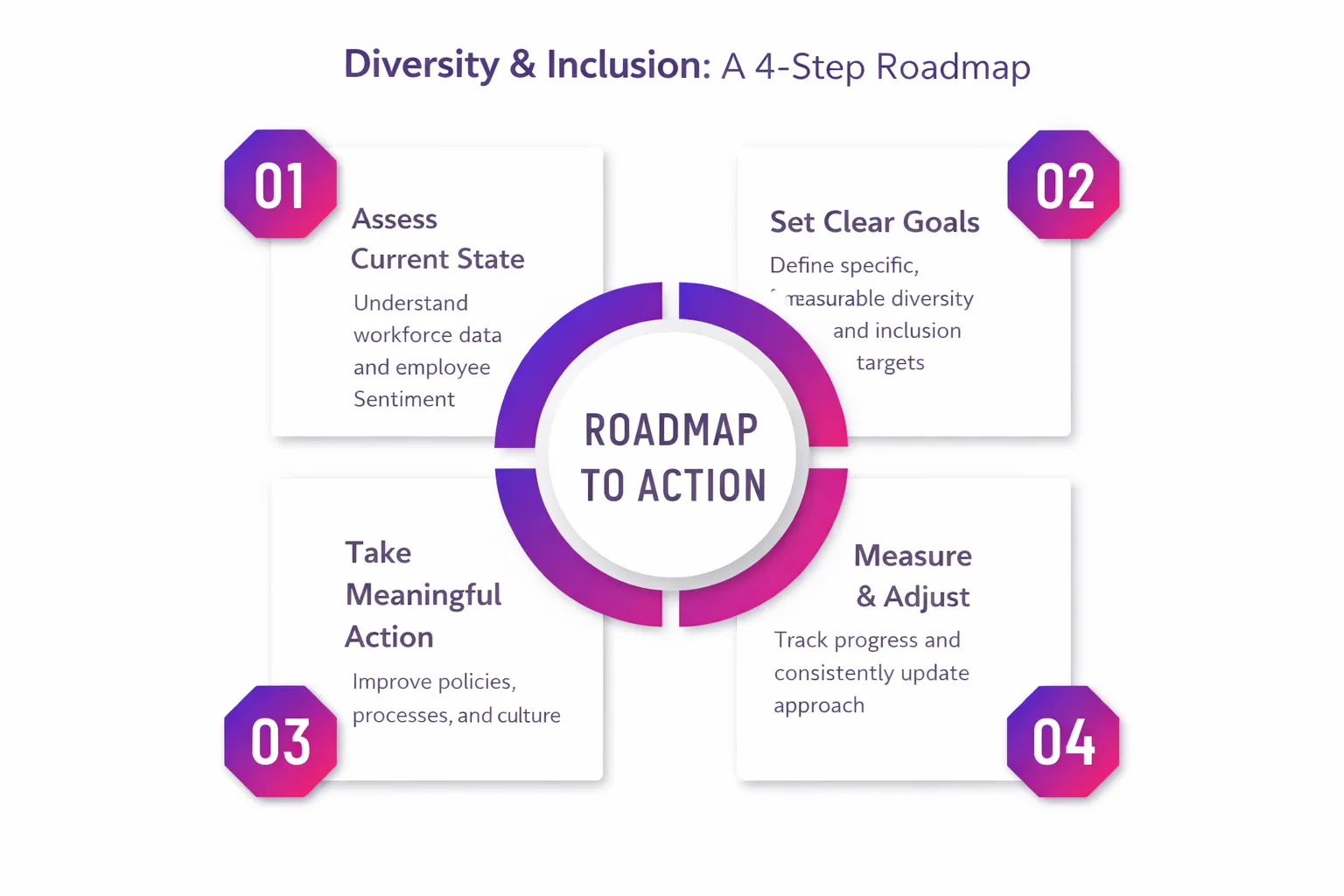
The 4-Step Roadmap to Measurable Diversity and Inclusion
Here’s how leaders are making diversity and inclusion in the workplace real: You need some clear steps that you can measure and repeat. A simple roadmap that can help your whole team go from intention to action, in 4 steps.
Step 1: Evaluate the Existing Situation
Start by examining your workforce in detail. Check workforce demographics – by job level and function. Track hiring, promotion, and turnover data to identify patterns. Use surveys and feedback to learn how people feel about fairness, voice, and trust. Useful metrics include representation ratios, promotion and pay gaps, as well as inclusion survey scores that demonstrate belonging at work. According to a recent survey, companies that practice good measuring practices are 1.7 times more likely to increase inclusion in their workplaces year over year.
Step 2: Set Clear and Realistic Goals
Goals must be definite and have deadlines. Separate goals and objectives (e.g., diversity) from goals and objectives (e.g., representation) when setting inclusion goals (e.g., survey scores). Relate these goals to business strategy and your corporate culture. Examples are representation targets for leadership roles, inclusion scores, and equal retention rates for groups.
Step 3: Take Action: Systems, Not Slogans
Change hiring with structured interviews and the inclusiveness of job design. Build leadership accountability and provide mentorship and sponsorship. Update policies, fairness, and transparency. Systems affect daily behavior and help instill inclusion in the way work is done.
Step 4: Continuously Measure, Review, and Make Adjustments
Track representation trends, scores for inclusion and engagement, and turnover by group. Share progress internally, use these measures as if they were business KPI’s, and make changes based on data – not assumptions.
Key Diversity and Inclusion Metrics That Actually Matter
To learn whether efforts to achieve diversity and inclusion are effective or not, companies must monitor the right metrics. These measures are an experience of reality rather than surface activity.
Metrics that matter most:
Representation by level: Indicates who is present in entry-level, management, and leadership roles.
- Hiring and promotion rates: Shows if all groups have fair access to growth.
- Pay equity indicators: Emphasize pay differences for people undertaking similar work.
- Inclusion and belonging survey scores: Measures how safe, valued, and heard people feel.
- Voluntary turnover by group: Indicates whether some groups leave more frequently than others.
Each of the metrics tells a different part of the story. The most important thing to learn comes from observing trends over time, not individual data points. Avoid vanity metrics, like policy or training sessions, that aren’t real-life in the workplace.
How D&I Performance Relates to Employee Survey and Employer Recognition
Inclusion data is important in employee engagement surveys. When people feel respected and supported, results from surveys on trust, fairness, and voice improve. These findings contribute to the development of a workplace culture of inclusivity that employees see and feel.
Strong, consistent data is also beneficial to employer branding by demonstrating that diversity and inclusion are measured and taken seriously. Many of the employer recognition programs that exist vary in the importance they place on culture, equity, and inclusion practices in their organization’s selection process. Measurable D&I efforts create credibility with the candidate pool and existing employees, and are not based on marketing language.
Common Mistakes That Jeopardize Diversity and Inclusion Efforts
Many diversity and inclusion efforts fail due to easily avoidable mistakes.
Common issues include:
- Treating D&I as a project rather than an ongoing part of corporate culture
- Relying solely on training without making changes to systems or processes
- Leaving D&I ownership only to HR and not leaders
- Measuring activity rather than actual results
With no leadership or tracking of results, work slows down. Real change occurs when inclusion is integral to normal day-to-day decisions, leadership behavior, and how success is measured.
Conclusion: From Intentions to Impact
Diversity and inclusion only make an impact if they are being measured and managed over time. Numbers tell some of the story, but belonging at work is one indicator of whether or not inclusion is real in a workplace. The clarity of a roadmap can help teams to go from good intentions to lasting change. Organizations that take meaningful data into account, listen to employees, and make adjustments grow a stronger corporate culture. When diversity and inclusion are acted upon as if they are core business priorities, then these values become part of how the work really gets done – not words on a page.

Related Articles

What research says about the effects of employer seals on current employees, potential applicants and employer image, from independent experiments and field data to the limits of the evidence.
Employee experience and customer experience are linked, but the link is weaker and more conditional than popular slogans suggest. This article reviews the evidence on staffing, training and workplace conditions and shows how employers can test the connection in their own business.
Most HR dashboards show too many metrics and trigger too few decisions. This guide defines ten employee experience metrics, shows a one-page layout and explains how to read your numbers against U.S. data.
A practical guide to calculating marketing ROI for small and mid-sized U.S. companies, including long B2B sales cycles, offline leads, a spreadsheet walkthrough and common errors.


