

Remote work is no longer a short-term solution or special option. For many companies, it is now a chosen way of working. Today, employers do not just compete on salary. They also compete on the work flexibility that has become very important to the workers. People want jobs that fit into their lives, not jobs that consume their time and energy.
Employees have trust in the expectations of their employers. They want a balance between work and personal life, and they want some choice in where they work best. This shift has altered the ways in which companies obtain and retain talent. The benefits of remote workers are very apparent on both sides. Employers can have more cohesive teams while employees are able to work with less stress and more focus. When done correctly, remote work is good for businesses because it allows growth, while it’s also good for workers because they feel happier, supported, and involved with their job.
What Remote Work Really Means Today
Remote work today is about results, not where someone sits. What is important is getting the work done well and on time. When teams work for outcomes, location is less important. This is one of the reasons why many companies are now realizing the benefits of remote workforce models.
There are a few common ways that remote work is set up. Some teams are completely remote, meaning that employees work from home all of the time. Others use a hybrid set-up, where people split their time between home and the office. Many companies are also flexible when it comes to remote days, so employees are able to work from home on certain days each week.
Remote work does not mean less work. In many cases, it means better goals and better focus. For remote work to be successful, trust is quite important. Clear communication, regular check-ins, and accountability can help teams stay connected and productive, regardless of where they work from.
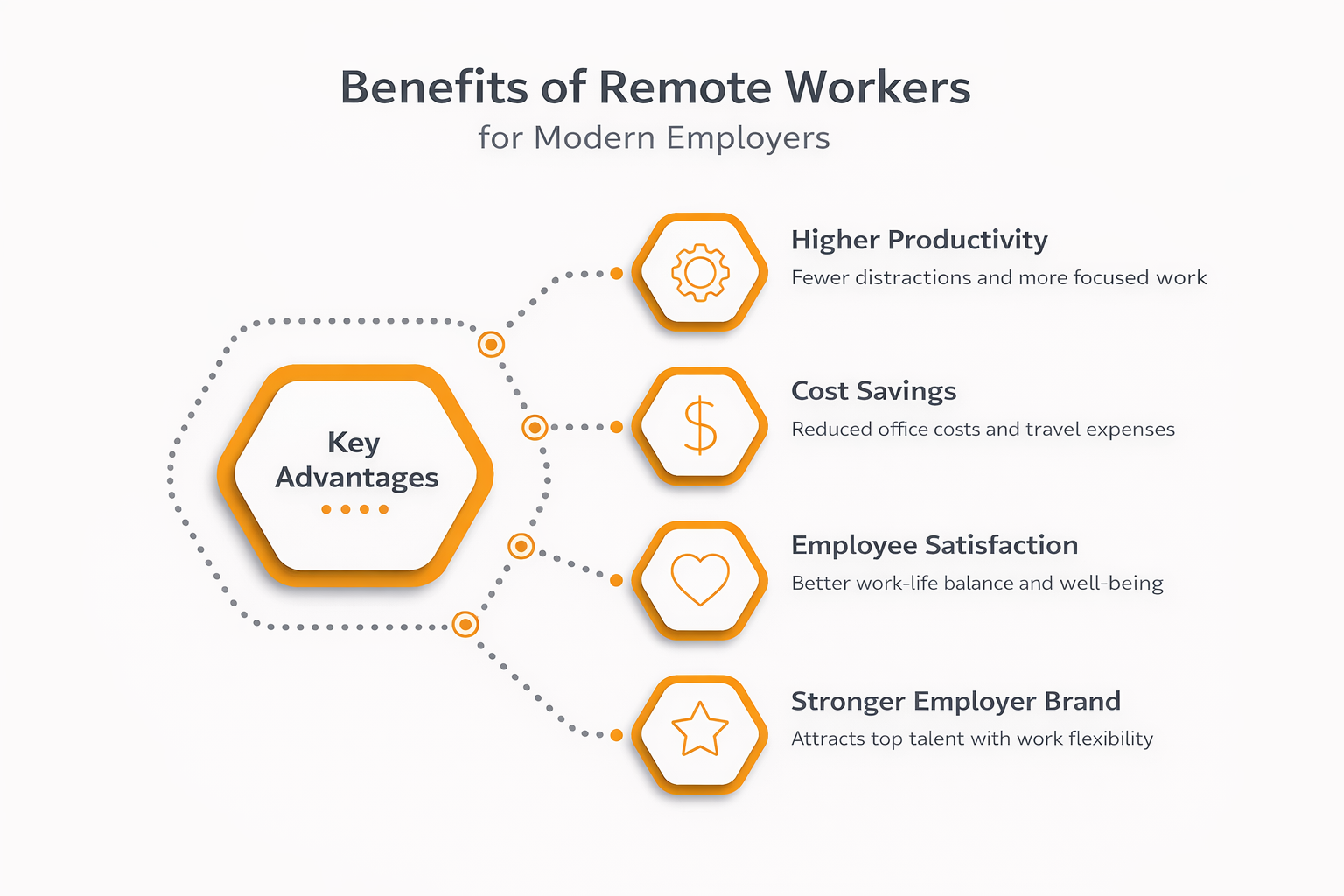
Productivity Benefits of Remote Workers
Remote work can support better performance when it is managed well. Many people have fewer distractions at home than in busy offices with constant noise and interruptions. Without long commutes, employees often start the day with more energy and better focus. This makes it easier to plan work and manage time wisely. One of the key benefits of employees working from home is the ability to work during the hours when they feel most productive. Clear goals and expectations matter more than watching the clock. When teams focus on results instead of time spent at a desk, employees can do focused work, handle fewer interruptions, and deliver stronger outcomes without added pressure.
Cost Savings for Employers
Remote working can save money for companies in a variety of ways. With a smaller number of people in the office, less is spent by the employers on rent, utilities, and regular day-to-day supplies. Travel costs and expenditures for on-site perks can go down, too. Remote work also decreases absenteeism and turnover; studies have shown that remote-friendly companies save up to $11,000 per employee per year in turnover. Another report found that remote work through offices will save up to 30% of real estate costs with smaller space dimensions. These savings can be reinvested in people, training, and tools that can support teams to be successful. Hiring without geographical trappings also means access to talent without additional relocation spending.
Increased Employee Satisfaction and Retention
Remote work provides a better balance for many employees between work and life. When people do not spend hours on the commute each day, they have more time for their families and their own needs. Less travel also means less stress, which helps people to stay healthier and happier at work.
A recent survey reveals that 76% of remote workers have higher job satisfaction due to work flexibility. When leaders allow employees to trust them and to have the choice as to where they are working, they feel that they have better morale and are more loyal to the company. Happier workers are there longer, take fewer sick days, and form stronger emotional bonds with their teams and goals.
How Remote Work Improves Engagement Survey Results
Remote work certainly does have an impact when employees are taking engagement surveys. When companies offer remote-friendly policies, the survey scores generally increase in key areas. Employees are more job-satisfied as they are trusted to get their work done. Work-life balance scores are greater when people can manage their time better and are less stressed on their commute. Trust in the leadership is also improved if flexibility is displayed, as the leaders are concerned about the well-being of their employees.
Surveys are not about what companies make people laugh about, but what people experience every day. When having flexibility is part of the routine of work life, employees feel that they are heard and respected. This feeling manifests itself in the way people feel in terms of interest in surveys, ratings, and engagement levels. In fact, studies done at the workplace found that employees who have flexible work options are 2.3 times more likely to feel extremely engaged at work. Flexibility comes in the form of one of the leading drivers of engagement as it affects the levels of energy, focus, and morale. When people feel supported in the way they work, their survey results are stronger and more consistent over time.
Remote Work and Strength of Employer Brand
Remote work is a great part of how people perceive a company. Today, many candidates seek employers that offer flexibility, and not just good pay. Remote policies send an explicit message of trust and forward thought, which enhances an employer brand.
Companies that support working remotely are often perceived as being fairer and more open to different needs and lifestyles. This also enhances public perception and helps companies to shine when it comes to employer-of-choice rankings. In fact, recent research shows that 64 percent of job seekers say that they would consider turning down a job if it did not offer flexible work options. Flexibility helps employers attract talent and build a positive reputation.
Common Issues That Employers Are Worried About in Remote Work
Many employers are concerned about remote work in the beginning. One of the commonest concerns is loss of control, especially when managers are unable to see employees at work. Still others fear communication issues, weaker team ties, or the inability to keep track of performance. These concerns are understandable, but are often linked to habits, not location.
Most problems can be solved by clear expectations. When goals are well defined, your employees know what success looks like. Regular check-ins to stay connected with teams without micromanaging them. Performance tracking works best when it is based on results rather than hours spent online. Strong habits – like clear communication, shared goals, and follow-ups – are more important than physical presence. When businesses prioritize results over geographical location, it becomes easier for them to manage and implement remote work, and it is more effective for everyone involved.
Remote-Readiness Checklist for Employers
Remote work is only successful when companies are prepared for it the right way. This simple checklist helps employers create the foundation to build on without putting stress.
Remote-readiness checklist:
- Have clear role goals and expectations so that everyone is clear on their priorities
- Utilize reliable communication tools for daily updates and team discussions
- Scheduling regular check-ins that are support-focused, not micro-managers
- Measure performance using results and quality of work
- Endorse flexible schedules where possible
- Train managers to be leaders of remote teams
Remote work is not about working on everything at once. Small and steady steps make a big difference. When teams know what is expected and have their backs, remote work is easier. A thought-out approach can help these employees stay focused while helping the employers plan for the long term. Preparation creates confidence on both sides and fosters a healthier working environment.
Mistakes to Avoid While Managing Remote Workers
Some remote work programs fail because of common mistakes. One error is in making remote work a special perk, not a clear company policy. Another is over-monitoring employees, which can be damaging to trust and morale. Poor communication habits are also causing problems, especially when teams do not know where to go for updates or decisions. If remote workers are ignored in meetings or planning, people may feel left out.
The most successful teams are focused on trust and clarity. When people have clarity of expectations and consistency of communication, tools become less important. Remote work works best when employees feel respected, informed, and included in decision-making that will affect their work.
Conclusion: Why Remote Workers are a Long-Term Benefit
Remote work is no longer a temporary fix. It is a long-term benefit to the modern employer. When it is well managed, remote work has the advantages of enhancing productivity, saving costs, and helping to foster employee satisfaction. Flexibility makes people feel like they are being trusted and valued, which results in greater engagement and loyalty.
Companies that measure results and listen to the feedback of their employees build healthier teams and a stronger corporate culture. The benefits of remote workers take longer to build, but with flexibility, trust, and clear goals as part of daily work. By placing emphasis on people and results, employers can build successful workplaces now and down the road.

Related Articles
What research says about the effects of employer seals on current employees, potential applicants and employer image, from independent experiments and field data to the limits of the evidence.
Employee experience and customer experience are linked, but the link is weaker and more conditional than popular slogans suggest. This article reviews the evidence on staffing, training and workplace conditions and shows how employers can test the connection in their own business.
Most HR dashboards show too many metrics and trigger too few decisions. This guide defines ten employee experience metrics, shows a one-page layout and explains how to read your numbers against U.S. data.
A practical guide to calculating marketing ROI for small and mid-sized U.S. companies, including long B2B sales cycles, offline leads, a spreadsheet walkthrough and common errors.