

Work and family life are more integrated than ever before. Employees no longer leave the needs of the family at the door when they come for work. Today, many people pick employers based on how well a job fits in with their personal lives, rather than how much it pays. Being a family-friendly employer means realizing that family responsibilities have an impact on focus, energy, and well-being at work.
Family needs also have an impact on loyalty and long-term performance. When employees are supported, they’re more likely to stick around in their positions, be engaged, and do their best work. In fact, a recent study of the workforce found that more than 70% of employees say that family-friendly benefits are key in determining whether they will stay with an employer. This demonstrates how significant these policies have become.
A family-friendly employer is not just about having the benefits on paper. It is about establishing a family workplace where policies are pragmatic, equitable, and actually utilized. This article examines the policies that matter the most, how they support employees, and how companies can measure real impact.
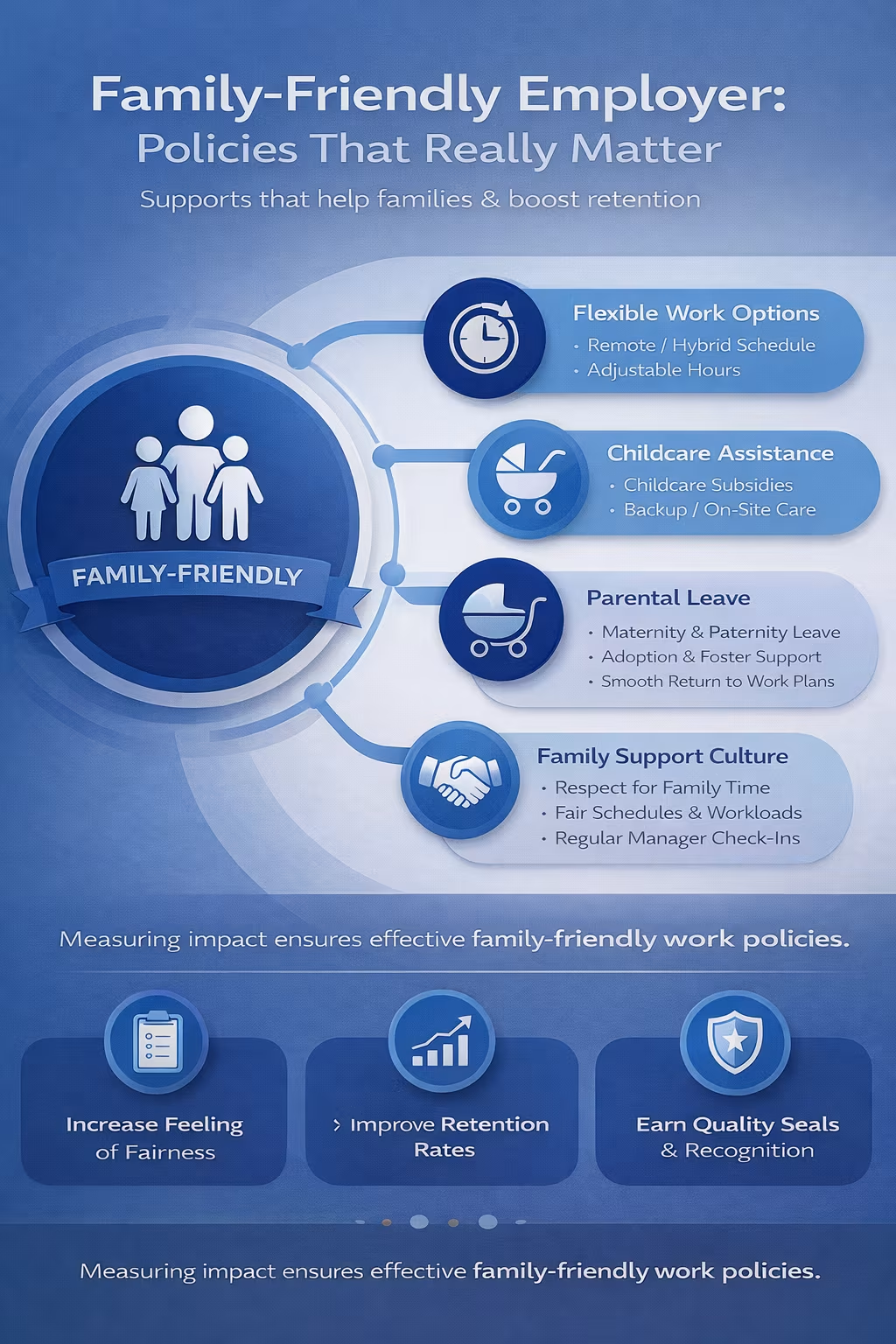
What Does “Family Friendly Employer” Really Mean?
A family-friendly employer is not characterized by a single policy or benefit. It goes way beyond parental leave alone. While leave is important, true family support covers many parts of the working life. It comprises parents with young children, employees, and young people who care for elderly family members, and people who provide for extended family. Families need to change over time, and workplaces need to be flexible enough to meet the needs of different stages of life.
Being family-friendly also requires thinking long-term. Family working is an approach where work is designed to fit around real life and not the other way round. This can include flexible schedules, understanding in the event of family emergencies, and support when there may be a change in life circumstances. These practices help employees to remain focused and committed rather than stressed out and distracted.
There exists a gap between much of what companies say and what employees experience. Policies written on paper do not always result in actual support. A recent workforce survey found that only about 45% of employees think their employer actually supports family needs, even if there are policies in place. This is an indicator of the later significance of real action instead of promises. A family-friendly employer makes the stated values become realities for the employees, which they can actually use in everyday life.
Why Family-Friendly Policies Benefit Employers Too
Family-friendly policies are not just good for employees – they can help employers to succeed too. When employees feel supported at home, they take less stress to work. Lower levels of stress make people pay more attention, make fewer mistakes, and help them work better throughout the day. This results in greater performance over time.
These policies are also beneficial for retention. Employees are more likely to stay with a company that is aware of their family needs. This means that there is less turnover, meaning time and money spent on hiring and training. In fact, as recent research has shown, companies with strong family-friendly benefits experience a reduction in employee turnover of up to 25 percent. Keeping experienced employees – as long as we have experienced employees, it helps the team to be productive and connected.
Engagement and morale also improve in family supportive workplaces. When people feel cared for, they will be more motivated and willing to contribute. This fosters trust in the leadership and makes the work environment more positive. Family-friendly employers also tend to enjoy a more positive reputation and are therefore less hard-pressed to secure experienced employees who value balance and stability.
These benefits are also evident in everyday outcomes. Absences decline when employees have easier control over their family needs. Trust is developed when leaders support real-life challenges. Over the long term, family-friendly policies help to ensure a stable workforce that is loyal, engaged, and willing to grow with the company.
Core Policies That Make a Workplace Truly Family-Friendly
A truly family-friendly workplace is founded on policies that are responsive to real family needs, not good intentions.
Flexible work arrangements are one of the most important policies. Flexible starting and ending times aid employees during school drop-offs, appointments, and caregiving tasks. Remote or hybrid options reduce commuting stress, and hours reduced during major life events mean employees don’t need to be laid off during trying times. This flexibility fosters family working by assisting people to balance their duties without having to take leave from their jobs.
Parental leave and caregiver support also make a difference. Paid maternity and paternity leave give families time to adjust without having to worry about financial issues. Support for adoption and caring takes care of fairness across family situations. Smooth return to work plans and equal access across roles help reintegrate employees back to work confidently.
Childcare support and assistance make a big difference. On-site or connected childcare, subsidies, and backup care allow working parents to stay focused. Companies that have childcare tend to have higher retention because they feel supported when they need it most.
Everyday Practices That Support a Family Workplace
Policies only work when they are supported by daily behavior. A good family workplace is created around daily actions, with documents playing only a secondary role.
Important everyday practices are:
- Respecting individual and family time away from work hours
- Setting realistic workloads and deadlines
- Encouraging supportive and understanding manager behaviour
- Planning schedules in a fair and advanced way
Avoiding the Stigma When Employees Use Family-Friendly
These practices support employees in feeling safe about asking for support and confident about using available policies. A recent workplace study found that employees are 60 percent more likely to take family-friendly benefits when they have support from managers who make it real by how they act every day.
Global Trends in Family-Friendly Employment
Acceptance of Change. Around the world, expectations relating to work and family are changing. Work-life balance has become a priority and not a bonus. Family-friendly policies are now considered a part of good employment, particularly for experienced professionals. Many employers are moving away from office presence and are more interested in the results and outcomes. Caregiver support is also gaining more attention as the population ages.
According to recent research conducted worldwide, over 80% of workers say work-life balance is a major consideration when they decide which employer to work for. These global trends shape the expectations of people living locally and force employers to adapt or lose out.
Measuring the Effect of Family-Friendly Policies
To know whether family-friendly policies work, employers need to measure results. Good measurement provides a picture of what helps employees and where changes are required.
Key metrics to track include:
- Work-life balance employee survey feedback
- Retention rates for parents & caregivers
- Absenteeism and return to work data
- Use of flexible work options
- Trends in engagement and satisfaction
Clear survey questions, tracking of use of policies, and department-level comparisons help document progress. Research also shows that organisations that monitor family-friendly policy usage are twice as likely to experience improved retention among their working parents and that this measurement contributes to better decisions.
Family Friendly Policies and Quality Seals
Quality seals and certifications are centred around actual workplace practices, not promises. To earn or maintain a family-friendly employer seal, companies need to demonstrate evidence of using and supporting policies. Consistent data helps to build credibility and trust when reviewing.
What is most important for quality seals:
- Employee survey results relating to family support
- Retention and return to work statistics
- Equal access to family-friendly benefits
- Clear documentation over time
A recent certification review report demonstrated that employers with documented family support metrics are much more likely to retain their family-friendly status. Documentation is a way to demonstrate commitment and helps organizations stand out as a genuine supporter of employee wellbeing.
Common Errors Made by Employers
A lot of family-friendly efforts fail because of mistakes that could have been avoided.
Common issues include:
- Offering policies with no evident leadership support
- Providing some roles access, and others exclusion
- Poor communication on the workings of policies
- Creating benefits employees fear taking
- Failing to measure results
When employees feel that benefits will hurt their career, policies lose value. Studies indicate that almost half of the employees do not avail themselves of family benefits if they think it will affect promotion opportunities. To overcome this, they must be fair, communicate, and measure outcomes on a regular basis.
Conclusion: Creating the Family Friendly Employer that Endures
Becoming a family-friendly employer is more than good intentions. Policies need to be practical and supported by behavior on a daily basis. Flexibility and family support help everyone by decreasing stress, increasing focus, and adding loyalty. Measuring results is a way to build trust and let employees know that the support isn’t just there to say so, but in fact, real. Strong policies with clear data support creating a supportive family workplace where people will feel safe taking the benefits available to them.
Long-term success is brought about by consistent action, commitment from leadership, and listening to the feedback from employees. By making family support a part of the culture, employers create better teams and a workplace that is flexible and can grow and change over time as family needs evolve.

Related Articles

What research says about the effects of employer seals on current employees, potential applicants and employer image, from independent experiments and field data to the limits of the evidence.
Employee experience and customer experience are linked, but the link is weaker and more conditional than popular slogans suggest. This article reviews the evidence on staffing, training and workplace conditions and shows how employers can test the connection in their own business.
Most HR dashboards show too many metrics and trigger too few decisions. This guide defines ten employee experience metrics, shows a one-page layout and explains how to read your numbers against U.S. data.
A practical guide to calculating marketing ROI for small and mid-sized U.S. companies, including long B2B sales cycles, offline leads, a spreadsheet walkthrough and common errors.


